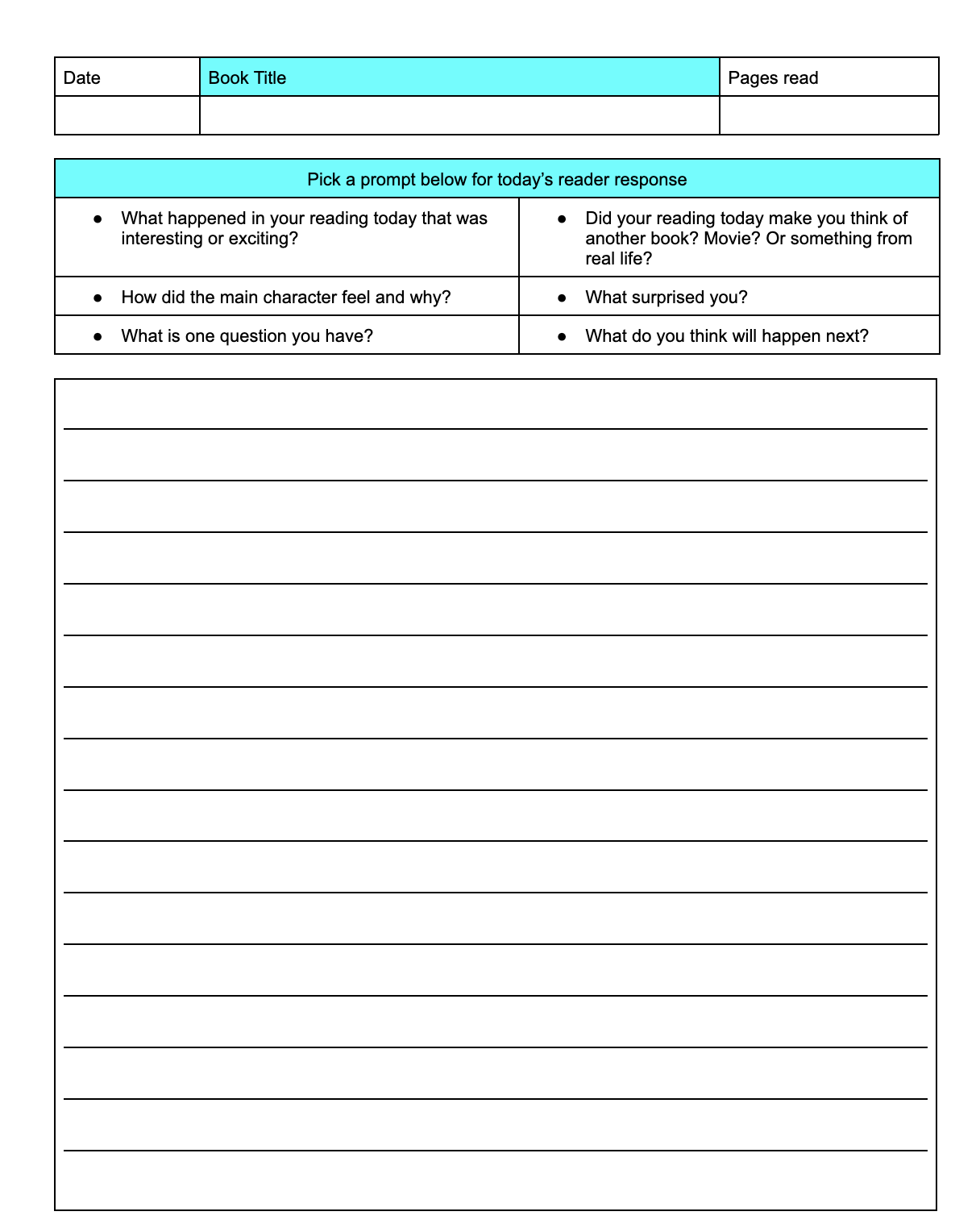
Reader Response Journal
I hated reading as a kid, throughout high school, college and even early adulthood. I would get bored, sleepy, my mind would drift. I would find myself re-reading the same page, paragraph, even sentence because I couldn't recall what I had just read. Yet, as someone who loves to learn, reading is essential. I have been developing a love for reading so that my children could develop a love for reading. They rarely listen to what you say, but they likely will copy what you do, said some parenting expert, or something like it.
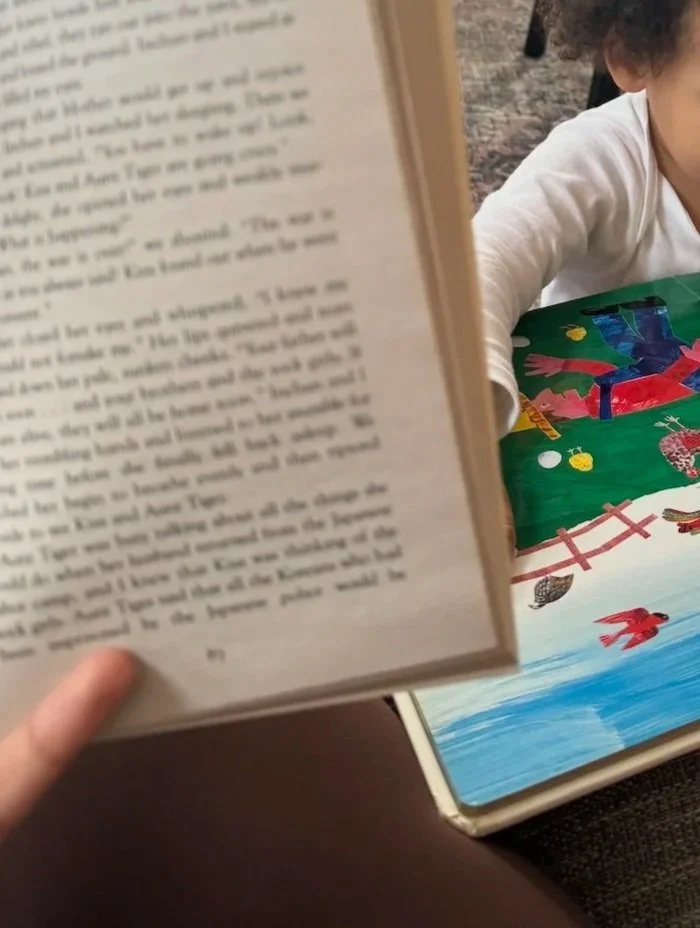
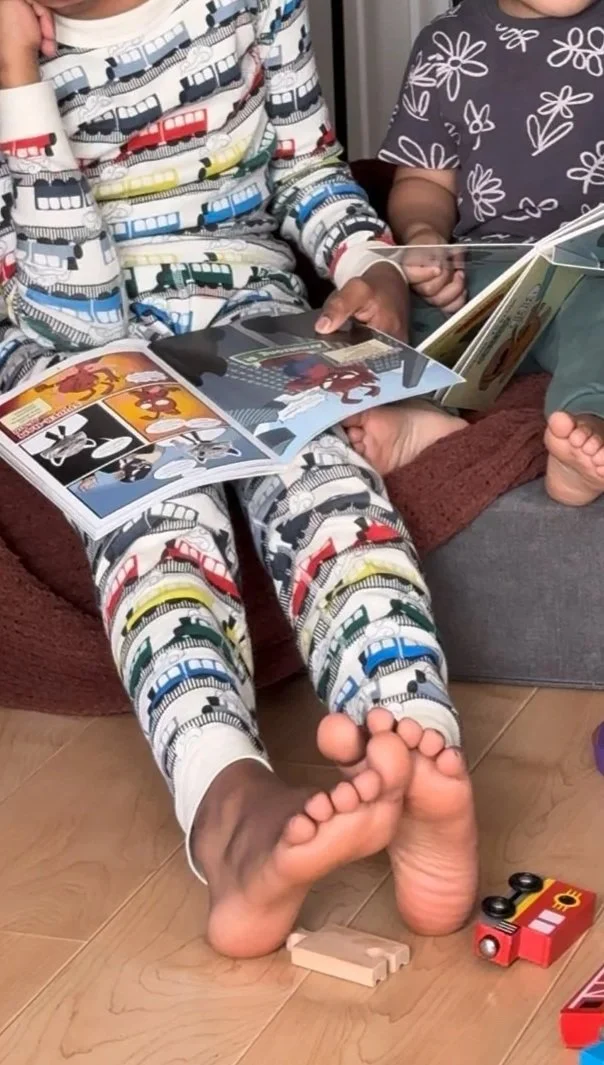
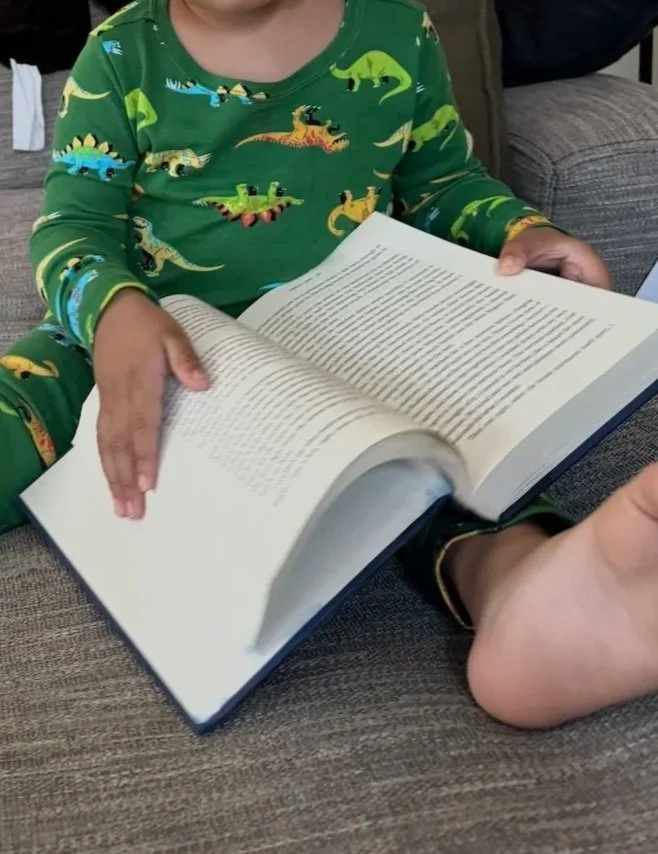
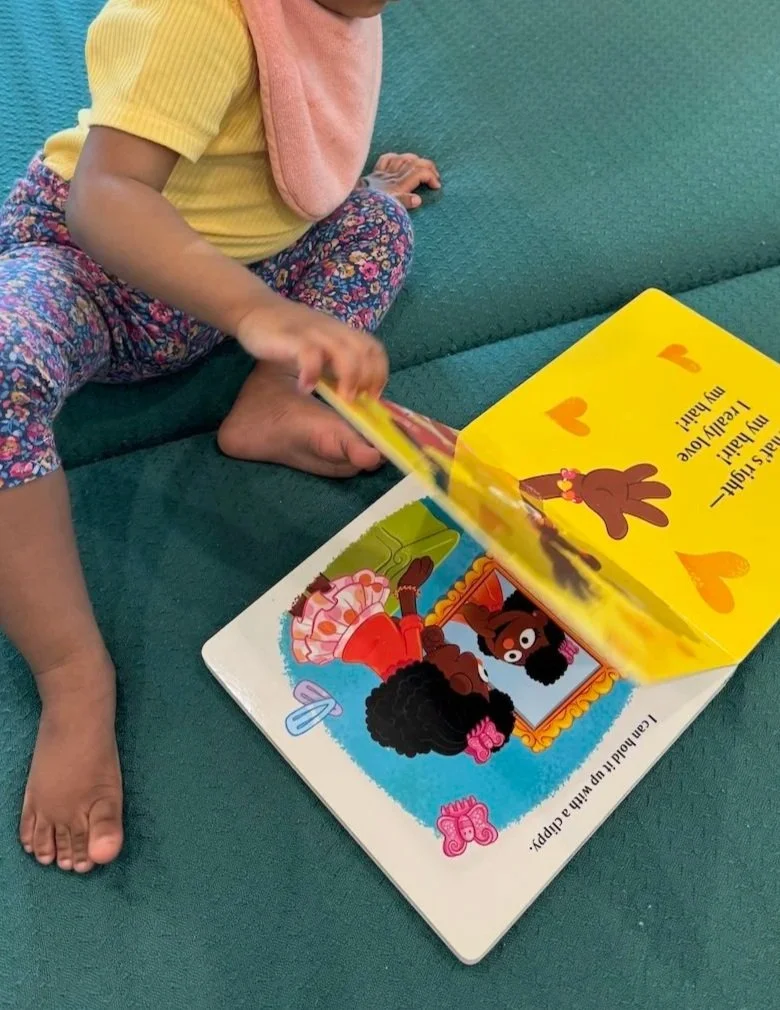
As an educator I realized children enjoy reading and their attention is held through shared reading and discussions. Being able to stop and think out loud, make predictions, and draw connections helps us retain the information we are reading. When shared reading isn't possible, a reader response journal is the next best thing. A place where you can write down your thoughts about your reading. A reader response journal holds you accountable for completing the reading and checking your own understanding of the text.
I created a reader response journal for my son where he can hand write his response. He has been working on improving his handwriting this year. Handwriting practice just for the sake of handwriting can be pretty boring busy work. With the reader's response journal handwriting is an added bonus. I have also been able to help him edit his writing, work on sentence structure and organize his thoughts. These are the moments when I am reminded how much we get done in very little time with homeschool. I hope you also realize that in just 10-15 minutes you can review this document with your little learner and support them with their reading, writing, penmanship, and vocabulary skills all at once. I have also added a list of sentence starters to help give our slow to start writers a head start. I love scaffolding and giving our learners the stepping stones they need until they are ready to do it independently.
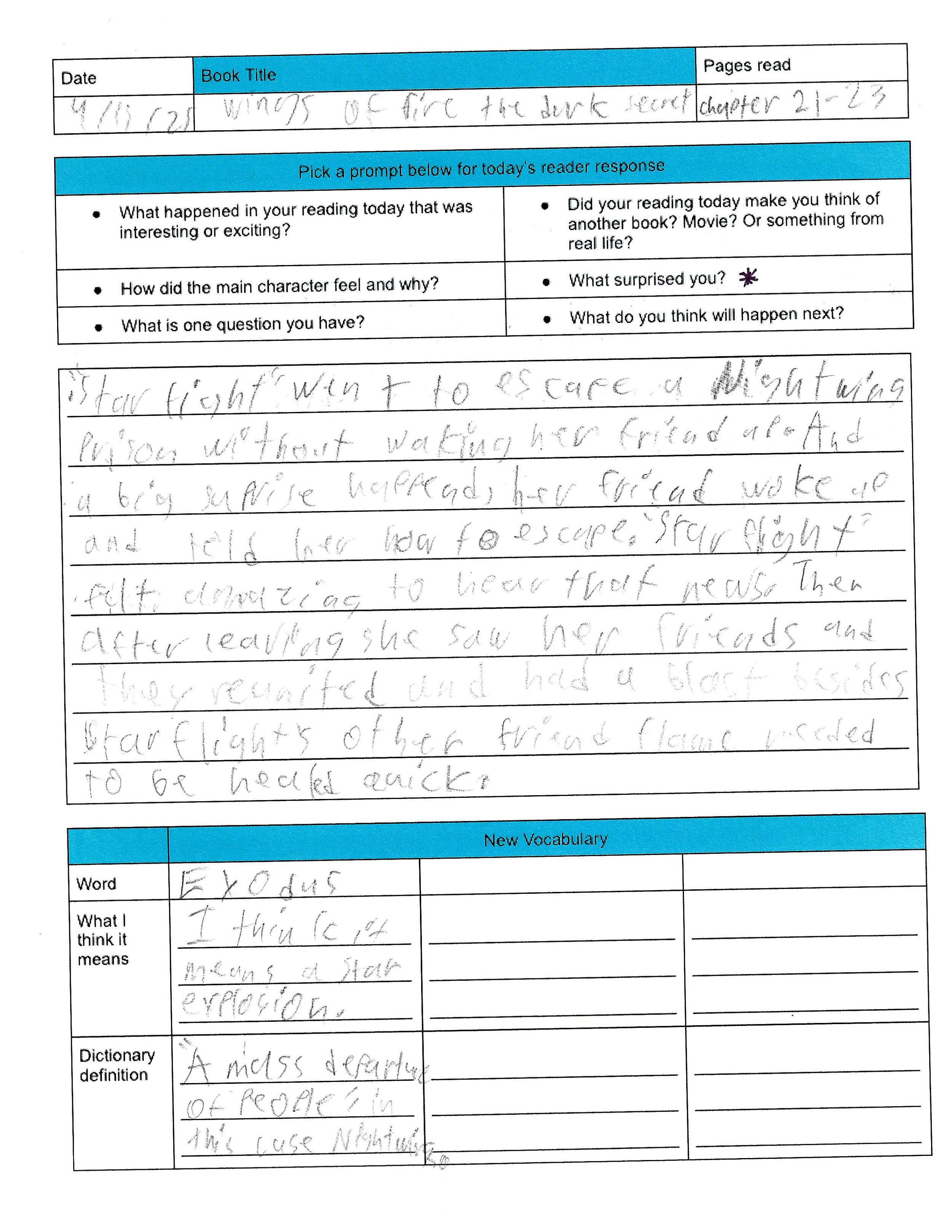
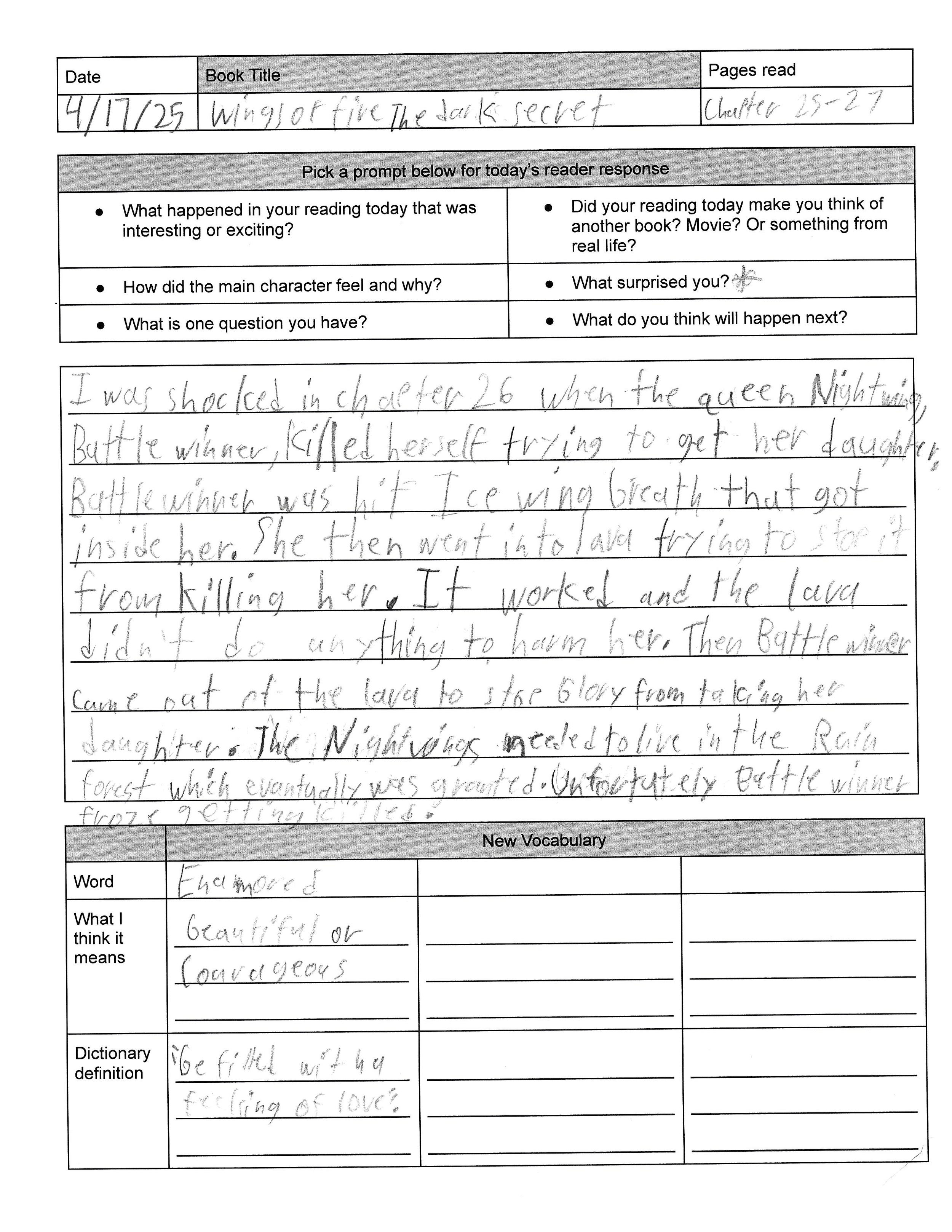
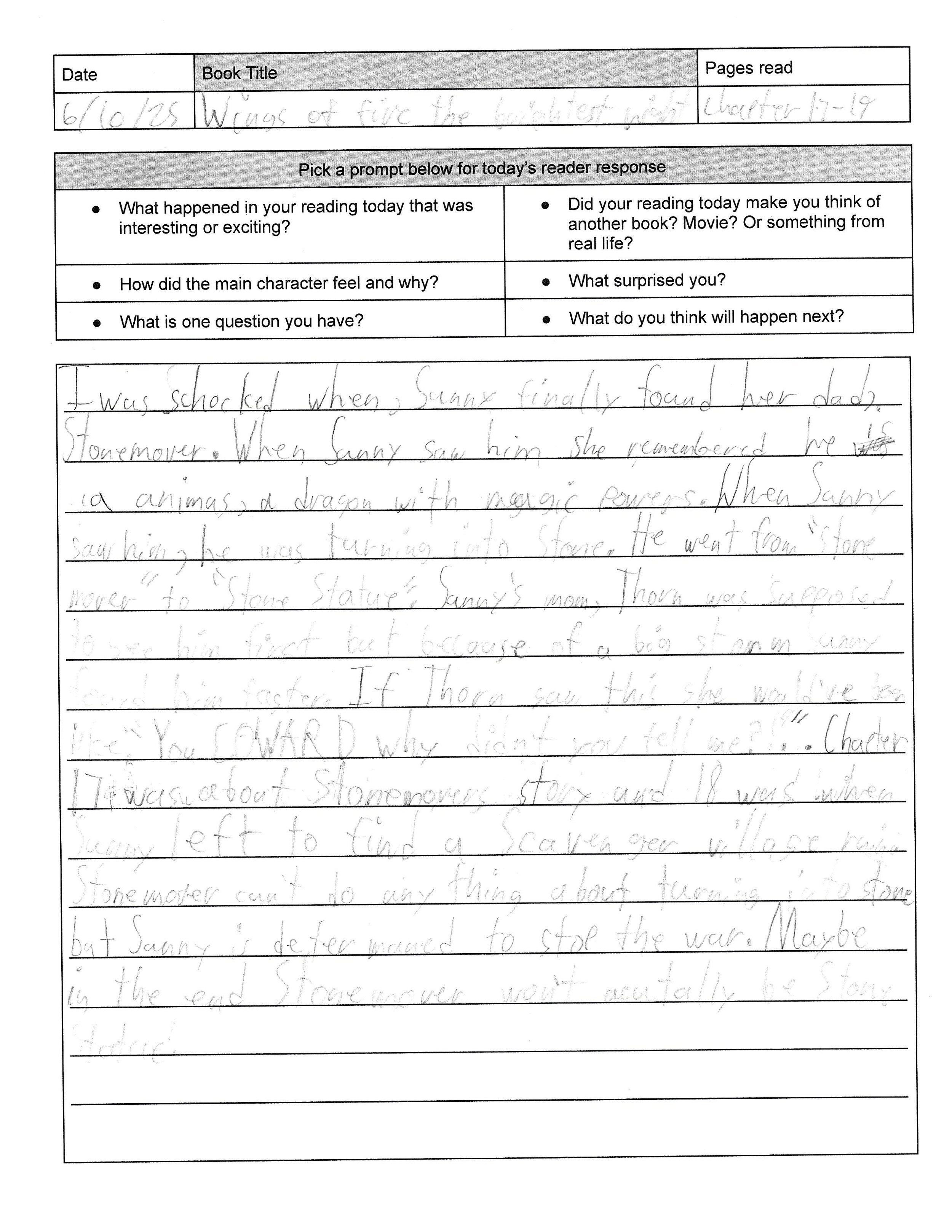
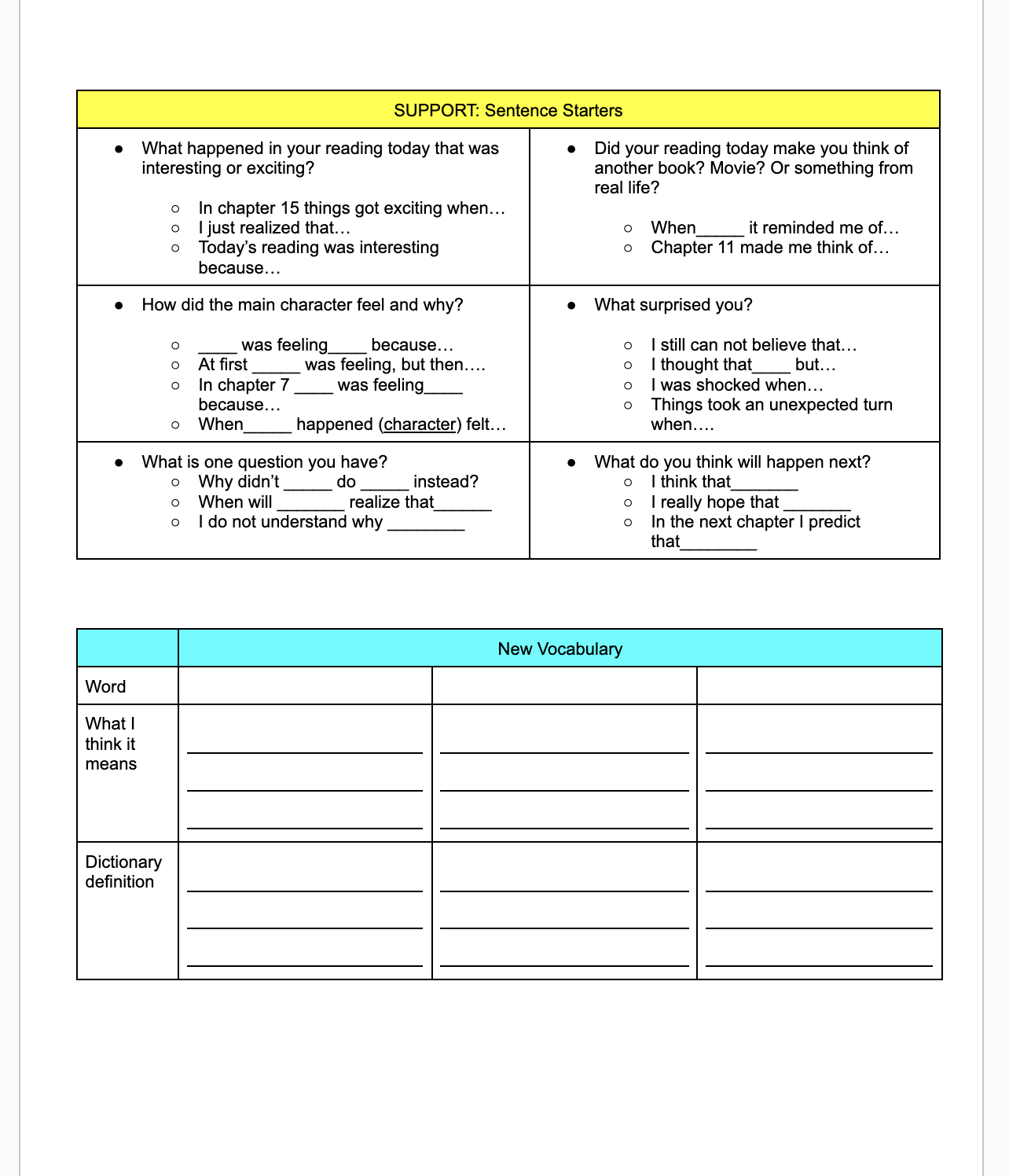
Above are 3 samples of Eli’s reader response journals. The first two are from April when I first created them. The last one is a recent one from June. I can see improvement in various areas. Penmanship, sentence structure, and comprehension. As you can see I also changed the form to allow for more space. The last photo shows the back of the form with the sentence starters and the space for vocabulary.
Vocabulary development also helps reading comprehension and enjoyment. Nothing is more annoying than having to constantly guess or look up unfamiliar words. Yet very few things are more exciting than learning a new word (or maybe just to me haha). Which is why I added a vocabulary section at the bottom. It provides an opportunity for your reader to make an educated guess based on context clues. As well as a space for them to add the dictionary definition.